What Is the Best Sealer for Concrete Countertops?
The best concrete countertop sealer protects against water, oils, food stains, household chemicals and everyday wear without making the concrete look excessively glossy or artificial. For kitchen and bathroom countertops, the sealer should also be easy to clean, durable and suitable for use around food after it has fully cured.
No single sealer is best for every concrete surface. A penetrating sealer may be appropriate for outdoor concrete where a natural appearance and breathability are priorities. An acrylic sealer can work well for decorative pieces and lower-use surfaces. For kitchen countertops and other heavily used surfaces, a high-performance urethane or hybrid coating generally provides greater resistance to staining and daily wear.
Concrete Sealer Comparison
| Sealer Type |
Best Applications |
Primary Advantages |
Important Considerations |
| Penetrating sealer |
Outdoor concrete, fire features and breathable surfaces |
Natural appearance; does not create a surface film |
Limited protection from oils, acids and food stains |
| Acrylic sealer |
Decorative concrete, furniture and lower-use surfaces |
Easy to apply and recoat; economical; available in different sheens |
Less chemical, scratch and heat resistance than higher-performance coatings |
| Urethane or hybrid sealer |
Countertops, sinks, vanities, bars and high-use surfaces |
Strong stain, water, chemical and wear resistance |
Requires careful surface preparation and controlled application |
| Densifier |
Polished concrete and surface hardening |
Strengthens and densifies the concrete surface |
Not a complete stain-protection system by itself |
| Wax |
Maintenance layer over compatible sealers |
Adds sacrificial protection and can improve surface feel |
Requires periodic reapplication and should not replace the primary sealer |
What Should a Concrete Countertop Sealer Protect Against?
Concrete countertops experience different exposures than floors, walls or exterior concrete. A countertop sealer should provide protection against:
- Water and standing moisture
- Cooking oils and grease
- Coffee, wine and acidic foods
- Household cleaners
- Cosmetics and personal-care products
- Heat from normal kitchen use
- Abrasion and everyday wear
Unsealed concrete is porous and can absorb liquids quickly. Even dense, high-performance concrete benefits from an appropriate sealing system when it will be used as a countertop, sink, vanity or food-service surface.
Film-Forming Versus Penetrating Sealers
Penetrating sealers react within the concrete or line its pores without forming a substantial coating on the surface. They preserve a very natural appearance and allow moisture vapor to move through the concrete. However, they generally provide less protection from food oils, acids and aggressive staining.
Film-forming sealers create a protective barrier over the concrete. Acrylic, urethane, epoxy and hybrid systems fall within this category. Their performance and appearance vary considerably. A properly selected film-forming sealer usually offers the best protection for kitchen countertops, although preparation and application are especially important.
Why Surface Preparation Matters
Even the best concrete sealer can fail if the surface is not properly prepared. Before sealing, the concrete should be:
- Fully cured according to the concrete mix and sealer requirements
- Clean and free of dust, wax, oil and form-release residue
- Uniformly absorptive
- Dry unless the sealer specifically permits damp application
- Free from incompatible existing coatings
- Tested in a small, inconspicuous area
Overly smooth, highly polished or contaminated concrete may prevent proper adhesion. Conversely, an excessively porous surface can absorb the first coat unevenly. Preparation should create a clean, consistent surface that allows the sealer to bond uniformly.
Our Recommendation for Concrete Countertops: U-SEAL
For concrete countertops, sinks, bathroom vanities, bars, tables and other frequently used surfaces, Fishstone recommends U-SEAL™ Concrete Sealer.
U-SEAL is a two-component hybrid urethane/acrylic sealer developed for concrete countertops and decorative concrete. It combines the durability and stain resistance associated with a urethane coating with the application and repair characteristics of an acrylic system.
U-SEAL Benefits
- Natural matte-to-satin appearance
- Strong resistance to water, oils and common food stains
- Chemical and abrasion resistance
- UV stability for interior and exterior applications
- Food-safe surface after full cure
- Water-based, low-VOC formulation
- Approximately two-hour pot life
- 3:1 mixing ratio
- Approximately 100–150 square feet of coverage per quart kit
- Repairable and recoatable when properly prepared
U-SEAL slightly enhances the concrete’s color while avoiding the thick, glossy or plastic appearance associated with some high-build coatings. Multiple thin coats are preferable to fewer heavy coats. Applying too much material at once can produce bubbles, foaming or an uneven finish.
Shop U-SEAL Concrete Sealer
When Is an Acrylic Sealer a Better Choice?
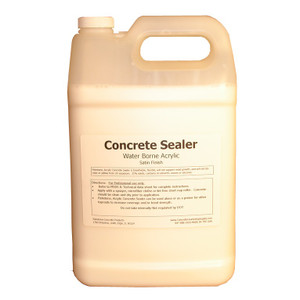
A water-based acrylic sealer can be a practical choice for decorative pieces, vertical surfaces, planters, architectural details and lower-use concrete. Acrylic sealers are typically economical, straightforward to apply and relatively easy to refresh.
However, an acrylic sealer generally will not provide the same level of stain, chemical and wear resistance as a properly applied urethane or hybrid countertop sealer. Consider how the finished piece will be used rather than selecting a sealer based only on price or ease of application.
Do I Need a Concrete Densifier?
A lithium-silicate densifier reacts with available calcium compounds within the concrete to help create a harder, denser surface. Densifiers are commonly used as part of polished-concrete systems and can help reduce surface dusting.
A densifier is not normally a replacement for a countertop sealer. It may improve the concrete substrate, but it does not provide the same protection against oils, food stains and household chemicals as a suitable coating system.
How Much Concrete Sealer Do I Need?
Coverage varies according to the concrete’s porosity, surface preparation and application method. Porous concrete absorbs more material during the initial coat, while a dense or previously treated surface absorbs less.
For U-SEAL, estimate approximately 100–150 square feet per quart kit. Always allow additional material for test samples, porous surfaces, edges, sinks and complex shapes.
Frequently Asked Questions
What is the best sealer for a concrete kitchen countertop?
A durable urethane or hybrid sealer is generally the best choice for kitchen countertops because it provides stronger resistance to water, oils, food stains and household chemicals than most penetrating or basic acrylic sealers. Fishstone recommends U-SEAL for high-use countertop applications.
Is concrete countertop sealer food safe?
Food-safety suitability depends on the specific product and its curing requirements. U-SEAL is food safe after it has been correctly mixed, applied and allowed to cure fully. Do not place food on the surface or expose it to standing water before the complete cure period has passed.
Will sealer make concrete look glossy?
Not necessarily. Concrete sealers are available in matte, satin and gloss finishes. U-SEAL produces a natural matte-to-satin appearance depending on surface preparation, application technique and the number of coats.
Can I seal over an existing concrete sealer?
Sometimes, but compatibility must be confirmed. An incompatible new coating may peel, cloud or bond poorly. Identify the existing sealer whenever possible and perform a test application. Complete removal of the old coating may be necessary.
How many coats of sealer should I apply?
The number of coats depends on the product and surface porosity. U-SEAL is normally applied as an initial saturation or primer coat followed by multiple thin coats. Thin, controlled applications produce more reliable results than heavy coats.
How long should concrete sealer cure?
Curing time varies by product, temperature and humidity. U-SEAL develops an initial cure in approximately 24 hours and typically reaches full cure in five to seven days. Protect the surface from standing water, chemicals and heavy use during the cure period.
Can concrete countertop sealer be used outdoors?
Only if the product is designed for exterior exposure and UV stability. U-SEAL is UV stable and can be used for appropriate interior and exterior decorative-concrete applications. Exterior concrete must also be designed to manage moisture and freeze-thaw exposure.
Why do concrete sealers peel or turn cloudy?
Common causes include moisture within the concrete, surface contamination, inadequate preparation, incompatible previous coatings, excessive application thickness and sealing before the concrete is ready. Proper preparation and test applications greatly reduce the risk of failure.
Choosing the Right Fishstone Sealer
Select a sealer according to how the concrete will actually be used:
- Kitchen countertops, sinks and high-use surfaces: U-SEAL
- Decorative and lower-use surfaces: Fishstone Acrylic
- Polished-concrete densification: Fishstone Lithium Silicate
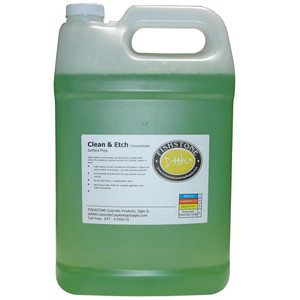
- Surface preparation before sealing: Fishstone Clean & Etch
- Specialty protective applications: Compare the additional sealer systems listed on this page
If you are unsure which system is appropriate, contact Fishstone with information about the concrete mix, age, finish, current coating and intended use. Proper product selection and surface preparation are the foundations of a durable sealed-concrete surface.