


AR Glass Fibers
$17.50 - $7,645.00
Celebrate with us and receive $20 OFF Shipping on orders over $100 for June only.
Use Code: Anniversary20
Thank you for 20 years of support!
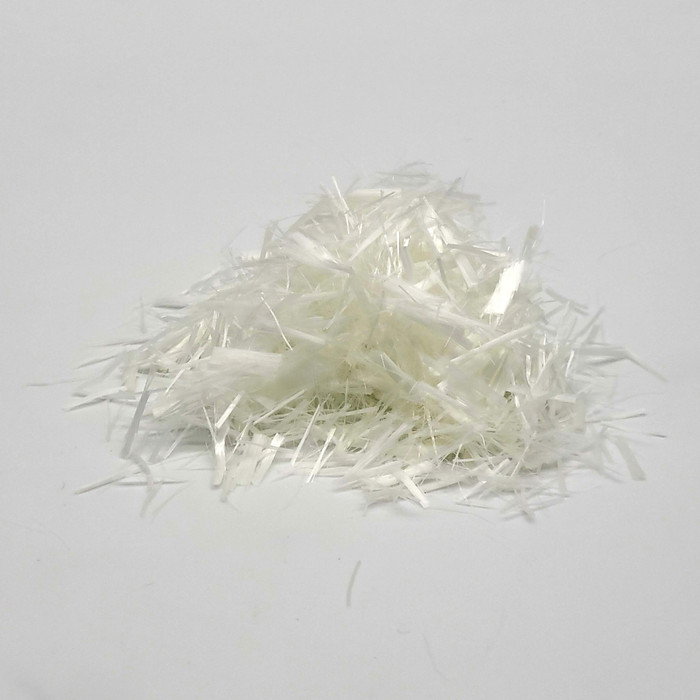

Fishstone PVA (Polyvinyl Alcohol) Fibers are a professional-grade reinforcement fiber for high-performance cementitious systems. These fibers are trusted by concrete fabricators, precast producers, and mix designers working with concrete countertops, GFRC, UHPC, ECC, and architectural concrete panels.
Not all concrete fibers work the same way. What separates PVA fibers from standard polypropylene or nylon fibers is their ability to form a true molecular bond with the cement matrix — a bond that can be up to 300% stronger than conventional synthetic fibers. This means PVA fibers don't just float within the mix — they become structurally integrated into the concrete itself.
The result is a material that actively resists crack propagation, distributes tensile stress across the matrix, and transforms otherwise brittle concrete into a tougher, more ductile composite — a property central to Engineered Cementitious Composites (ECC) and modern UHPC design.
Fishstone PVA Fibers are used across a wide range of high-performance and decorative concrete applications:
Fishstone PVA Fibers meet the requirements of:
Add fibers directly to the mixer during or after batching other ingredients. Mix at high speed for a minimum of five minutes to ensure complete, uniform dispersion. Additional mixing time will not negatively affect fiber performance or distribution.
For improved workability and finishing, a water reducer or high-range superplasticizer is recommended — Fishstone P-120 or Super-SIX-Admix™ are both compatible options.
Standard dosage rates vary by application and mix design. For ECC and UHPC applications, consult your mix design specifications. General concrete reinforcement applications typically follow AC-32 guidelines at 1.0 lb per cubic yard.
Store in a cool, dry location. Protect from moisture and rain exposure. No freeze restriction.
What is the difference between PVA fibers and polypropylene fibers? Polypropylene fibers primarily address early-age plastic shrinkage cracking. PVA fibers form a stronger molecular bond with the cement matrix, making them effective for long-term crack resistance, improved toughness, and structural reinforcement — particularly in thin or high-performance applications.
Can PVA fibers replace wire mesh or rebar? In thin-section applications like concrete countertops and GFRC panels, PVA fibers are commonly used as the primary reinforcement system, often in combination with AR glass fibers or a polymer binder. They are not a direct substitute for structural rebar in load-bearing applications.
Are PVA fibers suitable for concrete countertops? Yes — PVA fibers are one of the most widely used reinforcement fibers in concrete countertop fabrication due to their strong cement bond, thin-section performance, and crack resistance.
What is ECC and why are PVA fibers used in it? Engineered Cementitious Composite (ECC) is a class of high-performance concrete designed for exceptional ductility and tight crack control. PVA fibers are the standard reinforcement fiber used in ECC mixes because of their unique ability to produce controlled, distributed microcracking rather than single large fractures.
Fishstone Concrete Countertop Supply specializes exclusively in materials for decorative and high-performance concrete. We stock PVA fibers used by professional fabricators, architectural precast shops, and concrete innovators across the country. When you order from Fishstone, you're getting a fiber sourced from a proven manufacturer and backed by a team that actually works with these materials.

In a recent troweled a concrete tabletop, I evaluated the performance of PVA fiber within my mix design, and the results were impressive. I used PVA Fiber 15 at a 0.25% loading rate and PVA 100 at 0.7% (by dry weight). Both grades blended seamlessly into the mix, showing excellent stealth characteristics. Virtually invisible in the finished surface while still providing noticeable internal reinforcement. During placement and troweling, the fibers remained well-dispersed with no visible fiber fuzz or surface disruption, maintaining a clean, professional finish. The addition of PVA fiber enhanced crack resistance, surface cohesion, and structural integrity of the slab without sacrificing workability. When combined with C64, the mix showed perfect wet-out, improved cream migration, and significantly reduced air entrapment, leading to a smoother, denser surface. Overall, PVA fiber performed exceptionally well, delivering both functional reinforcement and aesthetic quality — a true “stealth fiber” solution for high-performance decorative and structural concrete applications.